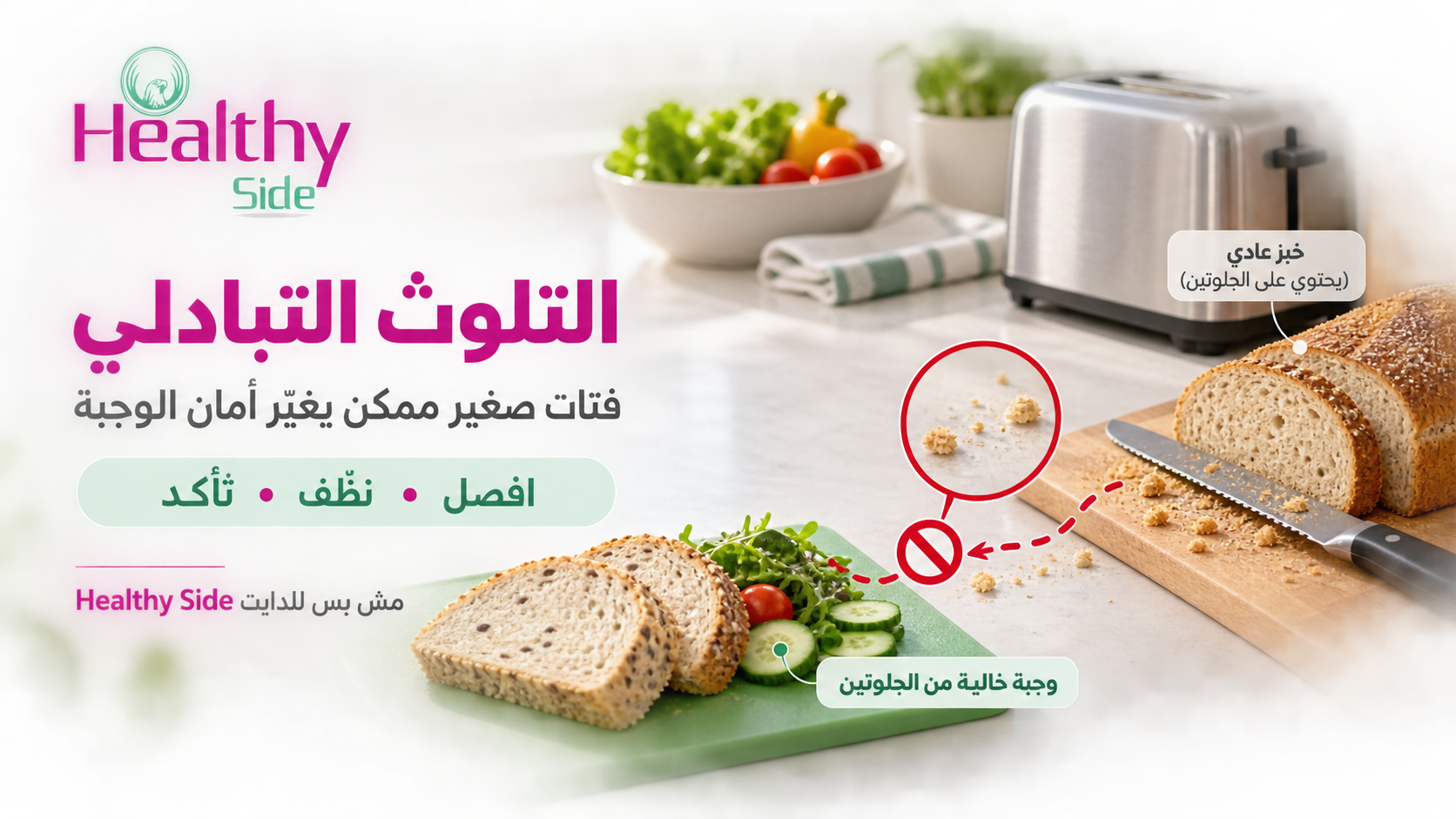
Food Allergen Cross-Contact: How Safe Food Can Become Unsafe
A meal may be made with gluten-free or allergen-free ingredients and still become unsafe through shared utensils, surfaces, cooking oil or equipment.
This accidental transfer is known as cross-contact.
What Is Cross-Contact?
Cross-contact happens when gluten or a food allergen is transferred from one food, surface or utensil to another food.
Common examples include:
Using the same knife for regular and gluten-free bread.
Sharing a toaster.
Frying food in oil previously used for breaded items.
Dipping a crumb-covered knife into a shared spread.
Using shared pasta water or a poorly cleaned colander.
Cross-contact is different from microbial cross-contamination. Cooking may reduce some microbial risks, but it cannot be relied upon to remove gluten or food allergens.
Common Risks at Home
Cross-contact may occur through:
Cutting boards.
Toasters.
Shared spreads.
Colanders and pasta water.
Frying oil.
Sponges and towels.
Scratched or porous utensils.
Airborne flour settling on surfaces or uncovered food.
How to Reduce the Risk
Wash hands with soap and water.
Clean preparation areas and utensils thoroughly.
Prepare the safe meal first.
Store safe food in sealed containers.
Keep safe products on higher shelves.
Use separate equipment when effective cleaning is difficult.
Label dedicated utensils and containers.
Avoid sharing cooking oil or pasta water.
Shopping and Eating Out
Read the complete ingredient list and allergen information every time. Recipes and manufacturing methods can change.
At restaurants, explain the medical condition clearly and ask about shared surfaces, utensils, fryers, pasta water and preparation areas.
If the staff cannot provide a clear answer, choosing another meal or not ordering may be safer.
Conclusion
Choosing an appropriate product is only the first step. Safe storage, preparation and serving practices are also necessary to reduce cross-contact.
Healthy Side مش بس للدايت
A meal may be made with gluten-free or allergen-free ingredients and still become unsafe through shared utensils, surfaces, cooking oil or equipment.
This accidental transfer is known as cross-contact.
What Is Cross-Contact?
Cross-contact happens when gluten or a food allergen is transferred from one food, surface or utensil to another food.
Common examples include:
Using the same knife for regular and gluten-free bread.
Sharing a toaster.
Frying food in oil previously used for breaded items.
Dipping a crumb-covered knife into a shared spread.
Using shared pasta water or a poorly cleaned colander.
Cross-contact is different from microbial cross-contamination. Cooking may reduce some microbial risks, but it cannot be relied upon to remove gluten or food allergens.
Common Risks at Home
Cross-contact may occur through:
Cutting boards.
Toasters.
Shared spreads.
Colanders and pasta water.
Frying oil.
Sponges and towels.
Scratched or porous utensils.
Airborne flour settling on surfaces or uncovered food.
How to Reduce the Risk
Wash hands with soap and water.
Clean preparation areas and utensils thoroughly.
Prepare the safe meal first.
Store safe food in sealed containers.
Keep safe products on higher shelves.
Use separate equipment when effective cleaning is difficult.
Label dedicated utensils and containers.
Avoid sharing cooking oil or pasta water.
Shopping and Eating Out
Read the complete ingredient list and allergen information every time. Recipes and manufacturing methods can change.
At restaurants, explain the medical condition clearly and ask about shared surfaces, utensils, fryers, pasta water and preparation areas.
If the staff cannot provide a clear answer, choosing another meal or not ordering may be safer.
Conclusion
Choosing an appropriate product is only the first step. Safe storage, preparation and serving practices are also necessary to reduce cross-contact.
Healthy Side مش بس للدايت
التلوث التبادلي، التلوث التبادلي بالجلوتين، حساسية الطعام، حساسية القمح، مرض السيلياك، تلوث الطعام بالجلوتين، منتجات خالية من الجلوتين، تجنب مسببات الحساسية، المطبخ الخالي من الجلوتين، قراءة ملصقات الطعام